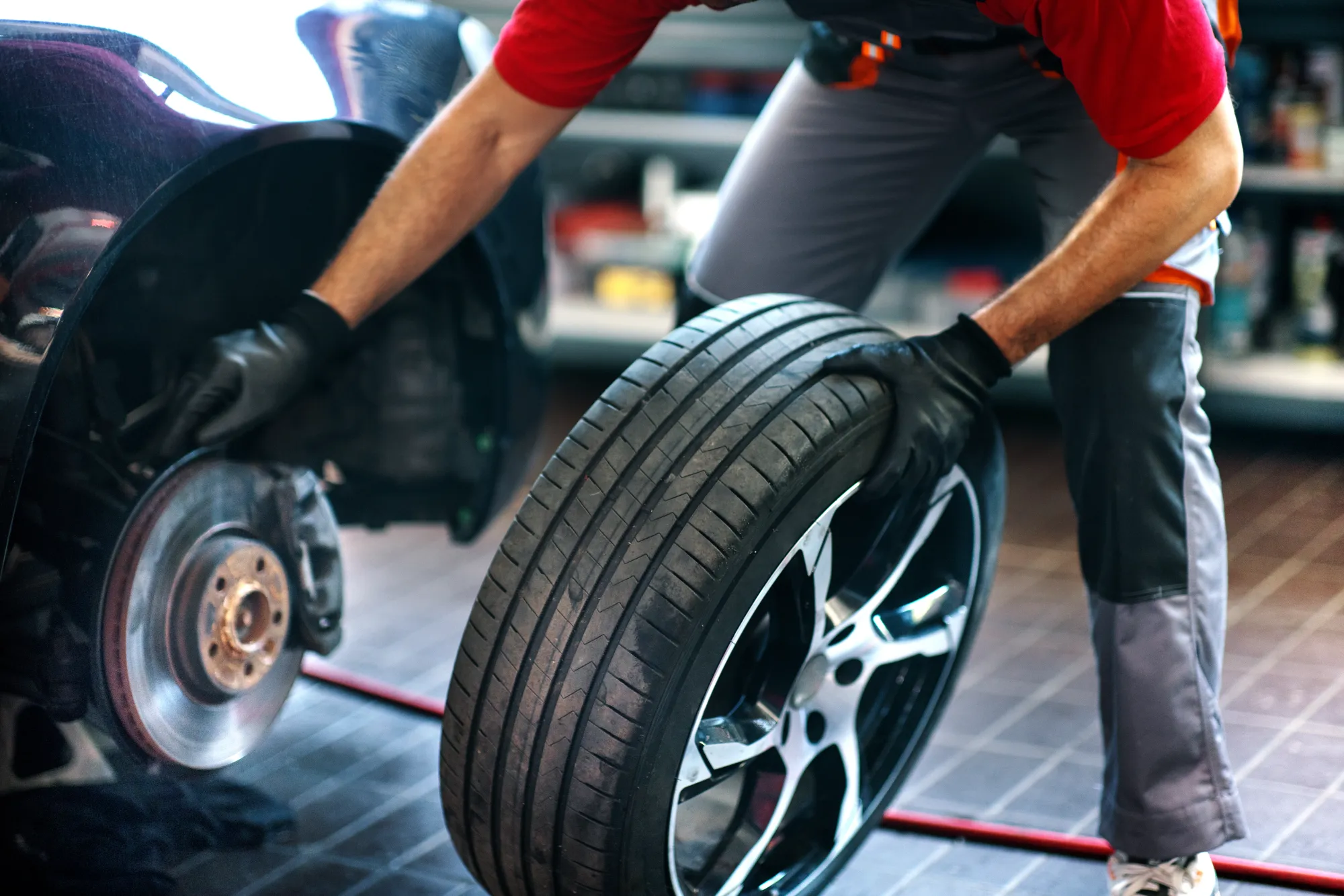
You already know the tires are done. Maybe a technician showed you the wear bars last month, or you can see it yourself in the driveway. The question keeping you out of the shop usually is not whether the work is needed. It is how to pay for it this week.
That is a normal place to be. According to AAA, one in three U.S. drivers skips or delays recommended maintenance and repairs, and 64 million American drivers say they could not cover an unexpected vehicle repair without going into debt. Those are not careless people. That is most of us, on the wrong week.
So let’s talk about the part of the counter conversation nobody explains ahead of time: how tire financing in Montgomery AL and auto repair financing in Millbrook AL actually work, what the application asks for, how the decision gets made, and what a payment term looks like once you sign it. There are no prices in this article on purpose. Tire and parts pricing moves, and a stale number in a blog post is worse than no number at all. For anything specific to your vehicle, ask us for a current quote.
Why Paying Over Time Comes Up at a Tire Counter at All
Car repairs do not arrive on a schedule. A nail finds your sidewall on a Tuesday somewhere between Prattville and downtown Montgomery, and suddenly you are weighing a plug against a full replacement. Brakes start grinding the same week the water heater goes out. AAA responded to nearly 32 million stranded motorists in a single year, and almost none of those drivers planned their day around it.
The instinct is to wait. Wait until payday, wait until the tax refund, wait until the noise gets worse. Trouble is, the vehicle keeps getting driven in the meantime, and worn tires and failing brakes do not hold still while you save up.
Being able to pay for tires over time is not a last resort in that situation. It is a scheduling tool. It lets the safety work happen on the day the vehicle needs it rather than the day your account balance says yes.
The Three Ways to Pay for Tires Over Time, and How They Differ
Our Financing & Leasing page lists three options, and the most useful thing to understand is that they are not the same kind of product.
The CFNA credit card
CFNA is a tire and automotive credit card issued through Centerpointe Financial Services. It carries no annual fee and offers promotional deferred interest on qualifying purchases when the balance is paid in full during the promotional window. Otherwise it behaves like any other revolving account: minimum monthly payments, and it is subject to credit approval.
The Goodyear credit card
The Goodyear card works on the same principle, with its own promotions and online account management around the clock. Like CFNA, it is subject to credit approval and requires minimum monthly payments.
Acima lease-to-own
Acima is the different one, and the difference matters. It is not a loan and not a credit card. It is a rental purchase, or lease, transaction. You are leasing the tires or the repair with a path to owning them, rather than borrowing money to buy them outright.
That structure is what allows Acima to say no credit history is required. It is also why the total cost of taking a lease all the way to ownership is higher than paying cash. Both things are true at once, and any honest explanation has to say both.
What “No Credit Needed Tire Financing” Really Means
That phrase brings most people to the page, so it deserves a plain answer.
Acima states that no credit history is required and that it regularly approves customers with less than perfect credit history. If your credit is thin, damaged, or simply nonexistent, that is the option most likely to say yes. For a lot of River Region drivers searching for no credit needed tire financing near them, that is the difference between driving on worn tires and driving on new ones.
What it does not mean is free or automatic. Acima discloses plainly that acquiring ownership by leasing costs more than the retailer’s cash price, and may cost more than double it. The Federal Trade Commission says the same thing about lease-to-own arrangements generally: you might pay twice what you would pay in cash.
Read that as information, not a warning to stay away. Sometimes paying more over time for tires you can drive on today is the right call. What matters is making that decision knowing the real total, a figure our counter can give you before you sign anything.
What the Application Asks For
Most of the anxiety around applying comes from not knowing what is on the form.
Acima’s application asks for four basic things:
- A government-issued photo ID. Standard identity verification.
- A Social Security number or Taxpayer Identification Number. Also identity verification, not a credit interrogation.
- An active checking account. This is the account the payments come from, and its history is a large part of how the decision is made.
- About three months of income history with your current income source. Steady is the operative word, not large.
Notice what is not on that list: a credit score target, a co-signer, or an explanation of anything that went wrong in the past.
What to Bring to the Counter in Montgomery or Millbrook
You can turn a two-visit process into a one-visit process by walking in prepared. Bring:
- Your driver’s license or other photo ID
- The debit card or account details for your active checking account
- A recent pay stub or other proof of steady income
- The vehicle itself, so we can actually inspect it
- Any tire size or estimate you already have in hand
That last one saves the most time. If you have already submitted a request through our quote page, we can have the numbers ready when you arrive.
The realistic version looks like this: you hand over an ID and a pay stub at our Bell Road, Madison Avenue, Magnolia or Coosada counter, you fill out a short application on your phone, and the decision is back before the technician has finished the inspection.
How the Approval Decision Actually Gets Made
For the two credit cards, the decision belongs to the issuer. It is subject to credit approval, and it uses your credit history the way any card application would.
For lease-to-own, the decision is looking at something different: is there steady money moving through your checking account, and has it been doing that for a few months? Our financing page describes it as an easy application with a fast approval decision, and that is largely because the inputs are simple.
Two things worth knowing about the outcome:
An approval amount is a ceiling, not an obligation. If you are approved for more than the work costs, you do not have to use all of it. You lease what the vehicle needs and nothing else.
A “no” on one option is not a “no” on all three. These are three separate companies with different criteria. If a card application does not go through, lease-to-own may still work, and the reverse happens too. If none of them fit today, we would still rather see the vehicle and tell you what is urgent and what can safely wait.
How a Payment Term Is Structured
A lease-to-own term has a predictable shape.
It starts with a low initial lease payment to get the work done and the vehicle back on the road. After that come renewal payments on a regular schedule, and that schedule can generally be lined up with how you actually get paid. Elmore and Autauga County fleet operators often set it against when their own invoices come in.
The standard agreement offers twelve months to ownership if you make every lease renewal payment. That is the long road, and it is the most expensive road.
The shorter road is the early purchase option, and here is the single most important sentence in this article: you are not automatically enrolled in it. Acima states clearly that additional payments are required to purchase early, and that enrollment is not automatic. If you intend to pay the lease off early, say so at the counter and ask exactly how it works before you sign. Two drivers can buy the identical set of tires and pay very different totals purely because one asked that question.
The FTC frames the same trade-off this way: a longer term lowers each payment but raises the total through markups and fees, while a shorter term costs more per payment and less overall.
The Questions to Ask Before You Sign
You are entitled to more than a friendly summary, and in Alabama that is not just good manners. Under the Alabama Rental-Purchase Agreement Act, a merchant must disclose, clearly and in writing in a form you can keep:
- Whether the merchandise is new or has been previously rented
- The amount and timing of the periodic payments
- A brief explanation of any other charges
- The total number of rental payments required and the total amount to be paid to acquire ownership
- That you do not acquire ownership rights unless you comply with the ownership terms
- Who is liable for loss of or damage to the merchandise
That fourth item is the one to put your finger on. Ask us to show you the line that says how many payments there are and what the total to own comes to. It is required to be there.
The FTC adds a short list worth running through: understand every fee and the total cost, know what happens if a payment is late or missed, check the return and refund policy, confirm who is responsible for repairs, and read the whole written contract rather than the summary. Ask whether payments are reported to the credit bureaus, because some lease-to-own plans report and some do not. One more from the FTC: if you return the merchandise and stop paying, you probably will not get back what you have already paid in.
Why Waiting on Tires or Brakes Usually Costs More
Waiting is not the free option, though it gets treated like one.
Worn tread is a braking problem, not a cosmetic one. The less tread you have, the less grip the tire can get on wet pavement, and the longer it takes to stop. Translated into a rainy fall commute on Bell Road or the run out to Coosada, that is a longer stopping distance in exactly the conditions where you need a shorter one.
Brakes follow the same logic on the mechanical side. A pad replacement caught when the noise starts is one job. The same problem driven for another two months, once the pad is gone and metal is riding on the rotor, is a larger one. Nothing about waiting made it cheaper, and while smart driving habits can stretch how long your brakes last, nothing stretches them past worn out.
AAA’s advice is to set money aside monthly for the unexpected and to pick a trusted shop before trouble starts. That is genuinely the best plan. Auto repair financing in Millbrook AL and Montgomery exists for the common case where the trouble arrived before the plan did.
Get the Number First, Then Decide How to Pay
The order of operations matters more than which payment option you choose.
- Get the vehicle inspected. You cannot make a good decision about a repair nobody has actually looked at.
- Get a current, written quote. Use our quote request page or ask at the counter. This is where the real figures live, and they are current rather than something printed in an article months ago.
- Then choose how to pay. Cash, a card, one of the two credit accounts, or lease-to-own. With the actual number in front of you, that choice gets a lot easier.
That order also protects you from arranging financing for work the vehicle did not need, or too little for work it did.
Schedule an Appointment
Don Duncan’s All-American Auto & Tire has been providing honest and dependable service since 2006, and we would rather talk you through your options than watch you drive another season on tires you already know are finished.
Come see us at either Montgomery location, on Bell Road or on Madison Avenue, or in Millbrook on Magnolia or in Coosada. Bring your ID and a pay stub if you want to explore paying over time, and bring the vehicle either way so we can tell you exactly what it needs.
Schedule an appointment and let’s get it handled.