
A burning oil smell after driving can come from engine oil leaking onto hot components, residue left after recent service, or oil burning inside the engine. For drivers in Montgomery and Millbrook, warning lights, visible smoke, and a falling oil level help establish how urgently the problem needs attention. The smell alone cannot identify a failed part.
If your car smells like burning oil, check for the stop-driving warning signs below before planning another trip. A smell that began after an oil change deserves a recheck rather than an assumption that it will disappear.
What causes a burning oil smell after driving?
An external oil leak
Oil that reaches hot engine or exhaust components can produce a burning odor once those surfaces heat up. AAA describes this hot-surface contact as a source of the smell. Possible external leak points include the filter, filler cap, drain plug, oil pan, and cooler lines. AAA’s guide to burning oil explains these clues.
Gaskets and seals also deserve inspection. Nissan identifies valve-cover and oil-pan gaskets among possible leak sources. Which part needs attention depends on where fresh oil is escaping, not simply where the smell seems strongest.
A clean parking spot does not rule out a leak: underbody shielding can catch oil before it reaches the pavement, according to Nissan’s oil-leak guidance.
Residue after an oil change or other service
Oil left on the outside of components during service is another possibility. Nissan notes that leftover oil after an oil change can cause small drips. Combined with hot-surface contact, that residue can explain an odor.
However, recent service can also be followed by an active leak, such as a filter or filler cap that is not secure. The timing is a useful clue, not proof of a mistake or proof that the smell is harmless.
Tell the shop when service took place and when the smell began. Ask for a check for fresh leakage as well as leftover oil. Avoid setting a fixed number of miles for the smell to clear before its source has been confirmed.
Oil burning inside the engine
Bluish smoke from the tailpipe, especially with declining oil level, points toward a different possibility: internal oil burning. AAA lists piston rings, valve-stem seals, and the crankcase ventilation system among potential causes.
Report tailpipe smoke separately from smoke near the engine. Those observations guide inspection; they do not establish that the engine needs an overhaul.
When should you stop driving?
Pull over as soon as it is safe and shut the engine off if the smell comes with:
- An oil-pressure warning while the engine is running.
- An overheating warning or temperature gauge above its normal range.
- Substantial smoke from under the hood or obvious rapid oil loss.
Arrange assistance instead of continuing to drive while the cause is uncertain. Do not run the engine just to reproduce the smell. When discussing transport with the shop, clarify whether its vehicle pickup and delivery service fits a vehicle that should not be driven.
An oil-pressure warning needs attention even if the oil level looks correct. The U.S. Lincoln MKZ owner’s manual, for example, instructs drivers to stop for an oil warning and not resume driving if it remains present despite a correct level. It also directs drivers to stop for overheating. Follow your own vehicle’s manual, and never remove a hot coolant reservoir cap.
If there are no urgent warning signs, a recurring smell still warrants prompt inspection. Its faintness alone is not enough to establish that driving is safe.
What should you note before inspection?
You do not need to find the leak yourself. Useful information includes:
- When it happens: during driving, at a stop, or just after parking.
- Recent work: oil changes, oil added between changes, or engine repairs.
- Smoke location: near the engine or from the tailpipe, observed from a safe position.
- Warnings: the exact dashboard symbol or message.
- Oil-level history: whether readings have changed and whether oil has needed topping up.
Check oil only when safely parked, following the manual’s procedure for your vehicle. Use level ground, switch the engine off, and observe the specified waiting period. Do not overfill or treat topping up as a repair.
Write down the sequence in plain language: “The smell started after service, I noticed it when I parked, and I have not seen where it comes from.” Add only what you actually observed. Bring the recent service invoice so the technician can review the work performed. If you have not checked the oil level or cannot tell where smoke originated, say so. A clear description is more useful than naming a gasket you suspect from an online search.
How does inspection identify the source before a repair?
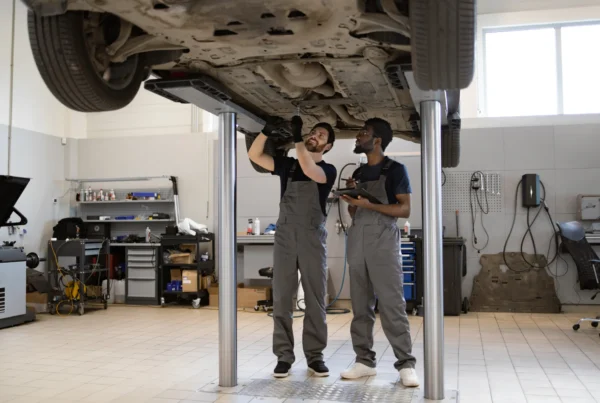
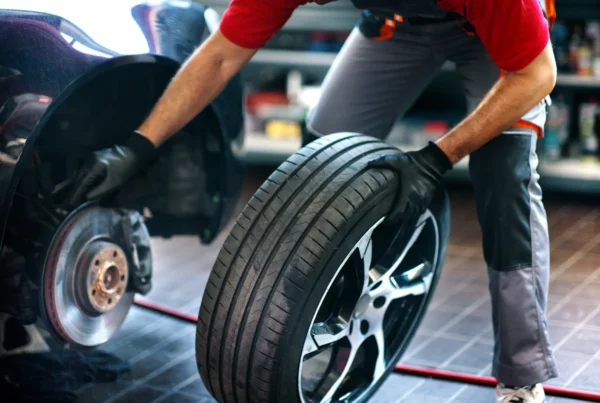
All American Auto & Tire lists engine repair and diagnostics among its services. For a burning-oil concern, engine diagnostics in Montgomery, AL should begin with the symptom history and a physical inspection.
The inspection needs to distinguish leftover residue, an active external leak, and evidence of internal oil consumption. Likely leak points can then be checked against the fresh oil found. Ask whether residue needs to be removed and the area rechecked to distinguish old oil from a continuing leak.
Some leaks need further testing to locate. An Audi of America technical bulletin hosted by NHTSA describes using compatible fluorescent dye and UV light; small leaks may require a test drive to become visible. The appropriate procedure depends on the vehicle and whether it is safe to operate.
Ask the technician to separate what has been confirmed from what still needs testing. If the explanation is a leaking gasket, ask which gasket and what evidence connects it to the odor. If the explanation is service residue, ask whether any fresh leakage was found and what to do if the smell returns. If the source is still uncertain, ask what the next diagnostic step is intended to establish before authorizing replacement parts.
Before approving work, ask what evidence identifies the source, what repair addresses it, and how the result will be checked. A current quote should come from the shop after the needed work is identified.